

Opening of the Strait of Hormuz could dramatically increase grain imports by Middle Eastern countries
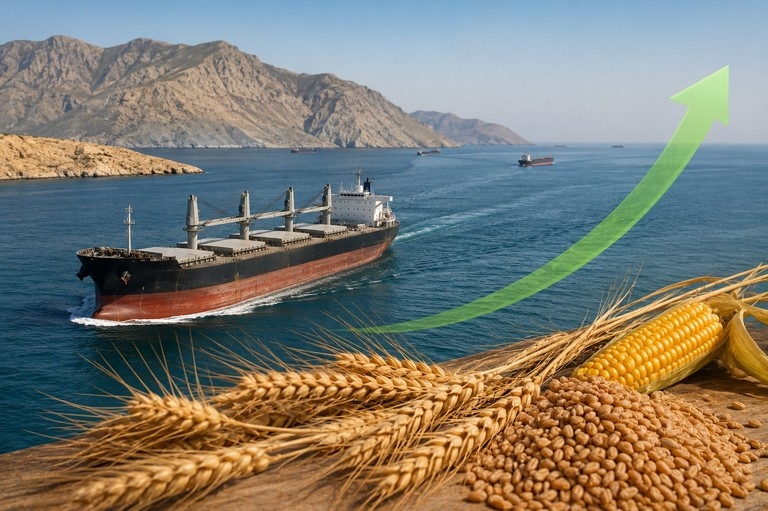
The achievement of an interim agreement between the United States and Iran to end the military conflict that lasted several months, as well as the prospects for the full restoration of shipping through the Strait of Hormuz, could lead to a significant increase in grain imports by the Persian Gulf countries. After a long period of using longer and more expensive logistics routes, the region may return to its usual supply patterns. This is reported by Bloomberg.
The Gulf countries remain among the most import-dependent in the world, sourcing around 90% of their food needs from abroad. Iran is a particularly important player, being one of the world's largest importers of soybean meal and a major buyer of Brazilian corn.
Key grain terminals in the region are located just across the Strait of Hormuz, including the port of Jebel Ali in the United Arab Emirates, Dammam in Saudi Arabia, and the Iranian port of Bandar Imam Khomeini.
According to Alexis Ellender, a leading analyst for the dry cargo market at Kpler, grain cargoes require specialized infrastructure, primarily silo capacity, so the main supply flows will inevitably return to traditional ports in the Persian Gulf.
Currently, only about three dry cargo ships pass through the region per day, while under normal conditions this figure exceeds 20 ships daily.
Due to logistical constraints, grain imports to the Gulf countries remain well below the annual average. According to Kpler, in May 2026, the region imported only 942,000 tons of grain, which is more than 50% less than in the same period last year.
Analysts believe that after the opening of the Strait of Hormuz, countries in the region may sharply increase grain purchases to replenish stocks that have been depleted due to months of supply disruptions.
At the same time, the restoration of full-fledged logistics chains is unlikely to be instantaneous. Due to the accumulation of a large number of ships waiting to pass through the strait, ports and transport infrastructure may face temporary delays and overloading.
Louise Follis, director of dry cargo market analysis at Clarksons, notes that countries in the region will indeed seek to quickly restore grain stocks, but this will first have to solve a number of logistical problems. Therefore, some inefficiencies in the operation of transport chains will persist for some time even after the opening of the strait.
For the global grain market, this may mean a temporary increase in demand from the Middle East and increased purchases from the largest grain exporters, primarily in the Black Sea region, the EU, and South America.
