

After the strikes by Ukrainian UAVs, the Russian Federation stopped shipping through the Don-Azov Canal and accepting applications for passage through the Kerch Strait, which led to an increase in wheat prices.
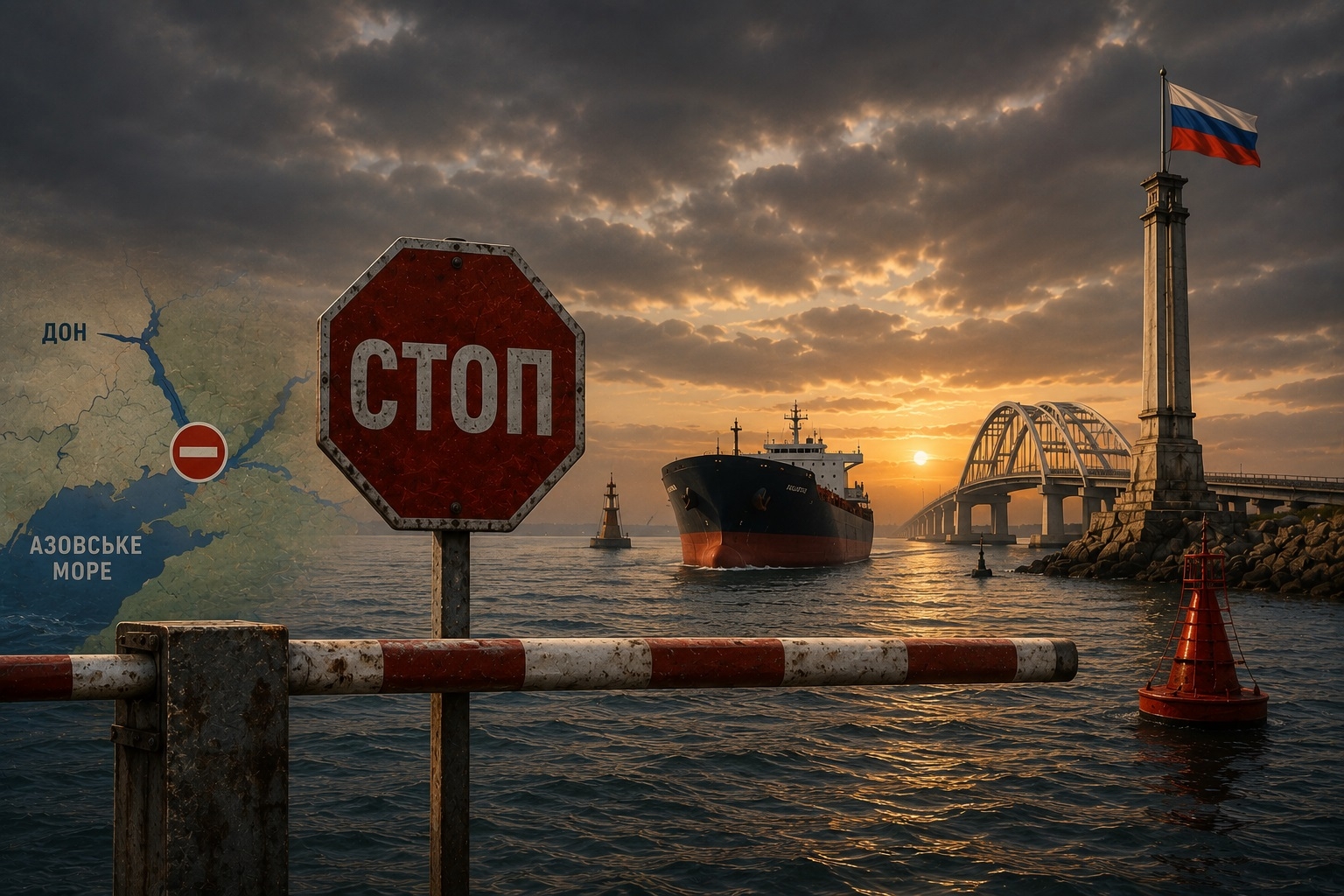
Successful and powerful strikes by Ukrainian forces on Russian maritime logistics in the Sea of Azov led to the suspension of transportation and exports from the Russian Federation through the Sea of Azov.
The Ukrainian Armed Forces' unmanned systems damaged 90 vessels of the Russian shadow fleet between July 6 and 12, and another 14 vessels (10 tankers and 4 ferries) on the night of July 12. According to analysts, about 75% of all 120 Russian vessels operating in the Sea of Azov, transshipment of cargo from ports in the Sea of Azov for export or transshipment in the Black Sea, have already been damaged.
It should be noted that the capacity of the Azov port is at least three times greater than that of the Taganrog port (in 2025 they were 6.6 million tons and 1.9 million tons, respectively). And Azov is the second largest port in the region after the port of Rostov (15.9 million tons).
It is believed that Taganrog specializes in the transshipment of metal (up to 40% of the volume), and to a lesser extent grain, while in Azov about 40% of cargo is grain, 30% is coal, and the rest is everything else (metals, fertilizers, chemicals, fuel, etc.).
Azov primarily serves farmers in the Rostov region and Kuban, Stavropol, Volgograd region and Voronezh. Up to 20% of cargo comes from the Volga region via the Volga-Don Canal system, in particular from Kazan. Taganrog receives cargo from the Rostov region, Belgorod, Lipetsk and Volgograd.
Now, huge queues of cars have formed at both ports, and the acceptance of grain for further export has been suspended.
Recall that on July 10, the Russian Federation temporarily suspended shipping through the Don-Azov Canal, a waterway that connects the Don River with the Sea of Azov, and restricted shipping through the Kerch Strait.
Amid information about shipping restrictions, September wheat quotes on the Euronext exchange in Paris rose by 5.5% to €216.25/t or $246.9/t on Friday, and winter wheat quotes in Chicago rose by 3.3% to $235.25/t.
This may increase demand for Ukrainian and Romanian wheat, although it is worth noting that the main grain exports from the Russian Federation go through deep-water ports on the Black Sea, and deliveries from the Sea of Azov are mostly carried out by coastal vessels of the river-sea type to Turkey, where demand for wheat is currently low.
According to Atria Brokers, the latest cabotage cargoes of Russian wheat with 12.5% protein were sold for delivery to the Sea of Marmara at a price of about $220/t CIF, which is almost $30/t lower than a month ago and $10/t lower than in the same period last year.
