

Grain exports from Kazakhstan in 2026/27 MY are under threat due to the blockade of transit by the Russian Federation
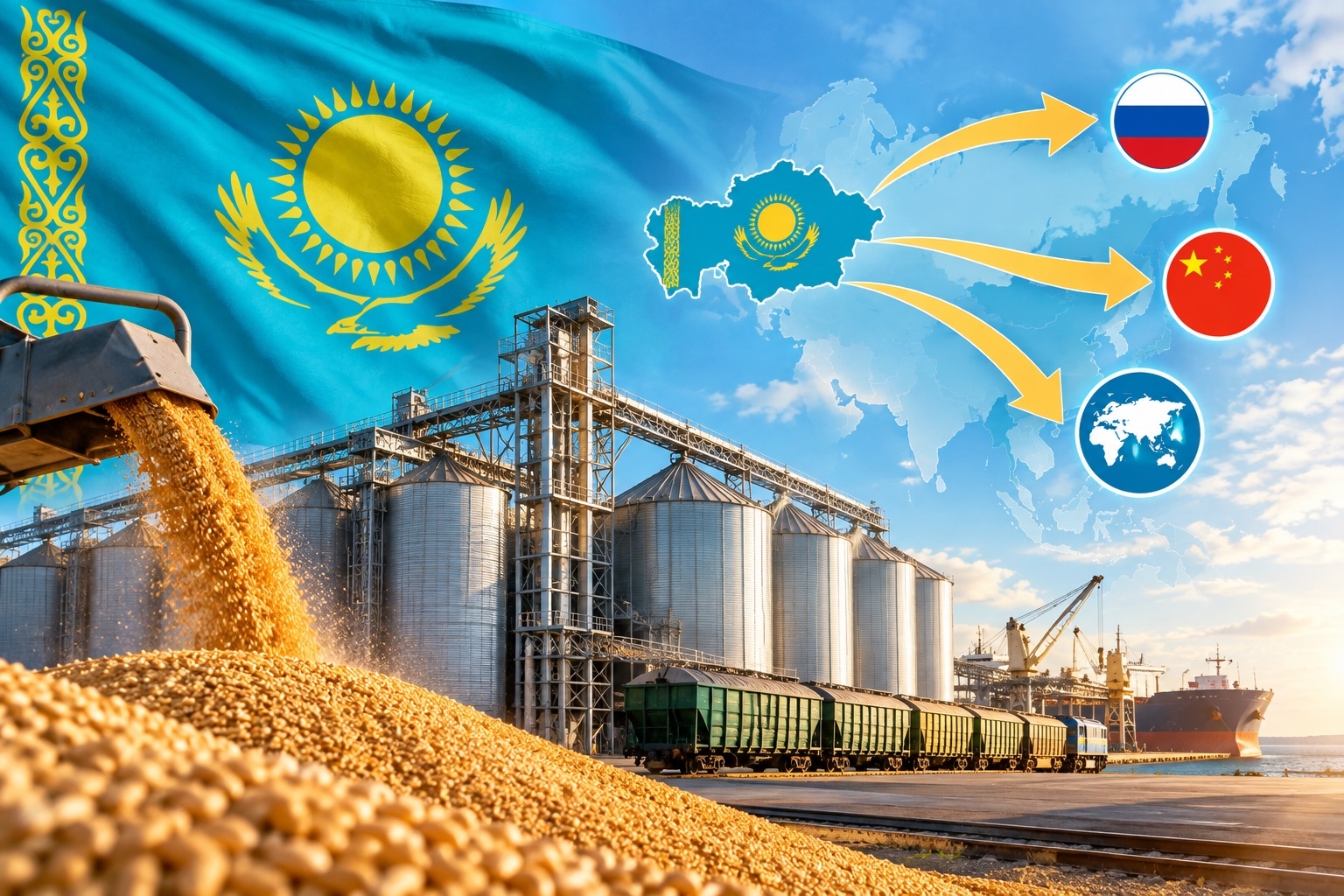
Kazakhstani grain exporters are starting the 2026/27 season in a very difficult logistical situation. Traditional routes through the Black and Caspian Seas are overloaded, and access to the ports of the Baltic countries, through which grain was supplied to the EU, is blocked by the Russian Federation.
In an interview with APK News, the Head of the National Association of Grain Exporters KazGrain, Zeynolla Abdumanapov, spoke about the scale of the problem and possible ways to solve it.
According to him, the Russian Federation has practically stopped grain supplies via the Black Sea amid attacks on port infrastructure and ships, and has redirected flows to the ports of the Baltic (Ust-Luga, Vysotsk), the Caspian Sea and the Far East. At the same time, since October 1, Estonia has banned the transit of Russian grain, and Latvia is preparing a similar ban. Therefore, Kazakh exporters tried to take advantage of the opportunity to supply to the Baltic ports, but were refused by the Russian Railways. Officially, the Railways did not ban grain transit, but refused, citing a “technical capacity shortage”. In addition, since June, the Russian Federation has increased tariffs for transit transportation to the Baltic and Finnish crossings.
It should be noted that Kazakhstan usually supplied the EU with durum wheat and oil flax through the Baltics (Kazakhstan is the largest supplier of flax to the EU). In the 2026/27 MY, the country harvested a significant amount of high-protein wheat, so it planned to increase its exports to the EU. However, without access to Estonian ports, this will be difficult to do.
The alternative Trans-Caspian International Transport Route (TMTM) through Georgia has low capacity and twice the logistics cost. Therefore, Kazakhstan is still trying to reach an agreement with the Russian Federation, using the transit of Russian grain to Uzbekistan and other countries as a trump card. Presumably, the Russian Federation will provide certain quotas for deliveries to the Baltics, but will primarily load this direction with its grain.
Kazakhstani exporters are also concerned about the decline in barley exports to Iran, caused by strong competition from cheaper Russian barley, the strengthening of the tenge by 20% per year (which led to an increase in the dollar price), and the increase in the cost of ship freight from Aktau to Iran from $17 to $95/t due to a shortage of the Caspian fleet.
After the closure of the Strait of Hormuz, Iran increased its demand for grain supplies via the Caspian Sea, but it is fully covered by exporters from the Russian Federation. By providing its ports to Russian grain producers, Kazakhstan risks turning from an exporter into a transit platform and losing its market position.
In general, KazGrain believes that the new season will be more difficult than last year (when 5.5 million tons were exported), due to a low harvest, expensive tenge, logistical problems, and the expansion of Russian grain into traditional markets for Kazakhstan.
The situation can be improved by:
- increased supplies to China, especially barley and flax, although the third iron crossing is unlikely to be operational this season;
- the opening in 2026 of the Darbaza-Maktaaral railway crossing bypassing Tashkent, which will allow for increased supplies to Uzbekistan, Tajikistan, and Afghanistan;
- supplies of high-margin goods through TMTM, since it is economically inexpedient to export other grains through it;
- increasing processing, which will not only reduce dependence on transit, but also allow exporting products with high added value.
We believe that the Russian Federation's refusal to transit Kazakh grain to Estonia in October is not only a technical problem, but also a signal of a change in priorities on the railway. Grain exports from Kazakhstan in the 2026/27 MY will depend not on the harvested crop, but on the volume of quotas for transit through the Russian Federation and the stability of supplies to China. In the worst case, to avoid stockpiling, the country will have to urgently stimulate domestic grain processing.
