

Attacks on civilian ships near Bulgaria pose new risks to the Black Sea grain route
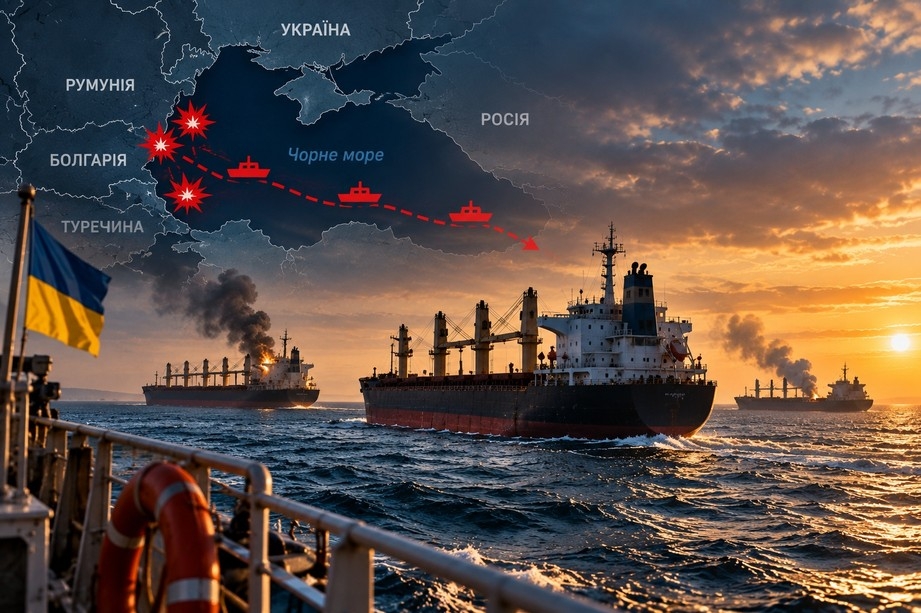
On the night of October 6, two civilian merchant vessels — the Togolese-flagged ALFA WATAN and the Palauan-flagged ABLE — were attacked in Bulgaria's exclusive economic zone in the Black Sea.
The incident occurred approximately 70 nautical miles east of the Bulgarian city of Byala, or about 130 km from the coast. The ALFA WATAN was critically damaged and sank a few hours later. There is no information about the rescued crew members.
A fire broke out on the ABLE after the attack. All 18 crew members were evacuated, two sailors were seriously injured and were taken to Varna.
According to Bulgarian authorities, naval and aerial drones were used during the attack, but their origin has not yet been officially established.
One of the ABLE crew members stated after the evacuation that he linked the attack to the transportation of Ukrainian cargo. However, this version remains the sailor's personal assessment and has not been officially confirmed.
According to AIS, ALFA WATAN's destination before the incident was Sulina in Romania. ABLE was carrying grain to Istanbul.
The attack came just a day after another serious incident in the Black Sea. On October 5, the ROYAD MAMMADOV, a ship carrying corn from the Ukrainian port of Izmail to Italy, caught fire and sank in Romania's exclusive economic zone.
The incident killed two people and rescued 11 crew members. Ukrainian President Volodymyr Zelensky said the ship was attacked by Russian drones, but Romanian authorities have not yet officially determined the cause of the incident.
Thus, within two days, three civilian vessels suffered serious damage in the exclusive economic zones of Romania and Bulgaria.
Romanian grain market analyst and founder of AGRIColumn Cesar Gheorghe believes that the series of incidents creates new risks for the coastal route by which Ukrainian agricultural cargoes are transported along the coasts of Romania and Bulgaria.
The port of Constanta, which remains one of the key transshipment routes for Ukrainian grain and oilseeds, is of particular importance in such a situation.
Further increase in risks for civil shipping may lead to higher insurance and freight costs, a reduction in the number of shipowners willing to work in the western Black Sea, and an increase in the cost of Ukrainian agricultural exports.
This creates additional pressure on domestic purchase prices in Ukraine, which are already suffering from the high cost of road and rail logistics.
