

Abnormal heat in Europe and a decrease in the forecast for the wheat harvest in the Russian Federation may support prices for Black Sea wheat
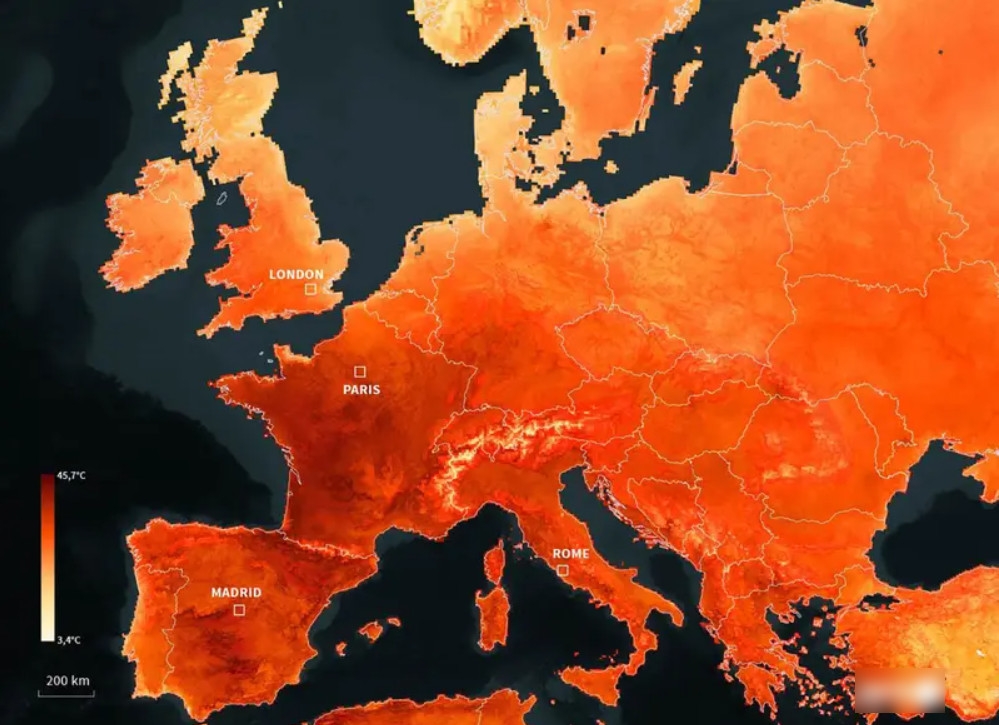
Western Europe has been hit by a second wave of abnormal heat this week, following a period of high temperatures in May. France and western Germany, the EU's key wheat producers, are the worst hit. High temperatures continue to reduce the potential yield of wheat and maize, with temperature records already being set in France, Switzerland and the UK.
According to weather forecasters, the peak of the heat will fall on Friday and the weekend, after which atmospheric fronts will bring some cooling. At the same time, some regions are expected to not receive sufficient precipitation, so moisture deficit and stress for crops will persist.
According to estimates by the analytical company Expana, if there is no significant rainfall in the next ten days, the corn harvest in France could fall below 10 million tons for the first time since 1990. For comparison, in 2025 the country harvested 13.2 million tons of corn.
The heat is also having a negative impact on the prospects for soft wheat production. Expana estimates that the average yield could fall below 7 t/ha compared to 7.4 t/ha last year, which would reduce production by at least 1 million tons compared to the 2025 harvest of 33.4 million tons. Due to the high temperatures, the barley and wheat harvest in France has already started one to two weeks earlier than usual.
The European Commission in May lowered its forecast for EU soft wheat production in the 2026/27 marketing year to 126.9 million tonnes, down from 127.3 million tonnes in April. This is significantly lower than the previous season's harvest of around 135 million tonnes.
Next week, the heat wave is expected to spread to the Black Sea countries, where wheat is in the grain filling phase. Although weather conditions in Ukraine, Romania, Bulgaria and the southern regions of the Russian Federation remain generally favorable for crop formation, further increases in temperatures may gradually reduce yield potential.
That is why a possible reduction in production in the USA and EU countries could become a key factor supporting world wheat prices, which, in turn, will help maintain high prices for Black Sea wheat as actual crop losses are assessed.
At the same time, the analytical company SovEcon lowered the forecast for the wheat harvest in the Russian Federation in 2026 from 90.3 to 88.9 million tons compared to 91.1 million tons in 2025. The reason was the reduction in the area under wheat to the minimum level in the last 12 years — 25.8 million hectares.
The area under spring wheat decreased the most — to 9.9 million hectares compared to 10.5 million hectares last year, while the area under winter wheat remained unchanged at 15.9 million hectares.
At the same time, very favorable weather conditions in the south-west of the Russian Federation — the country's main export region — allow us to expect a sharp increase in wheat production to 37.4 million tons compared to 31.9 million tons last year. This may increase price pressure at the beginning of the new marketing season.
However, already in September, when the market receives the final results of the spring wheat harvest in the Russian Federation, the USA and Canada, world quotes may be significantly adjusted depending on the actual yield indicators.
Under such conditions, it is advisable for Ukrainian farmers not to rush into active sales of food wheat at the start of the season and, if possible, postpone the sale of the main volumes to the autumn period. In contrast, rapeseed sales may remain more profitable at the beginning of the marketing season.
