

Water levels in the Rhine have dropped to record lows due to heatwaves
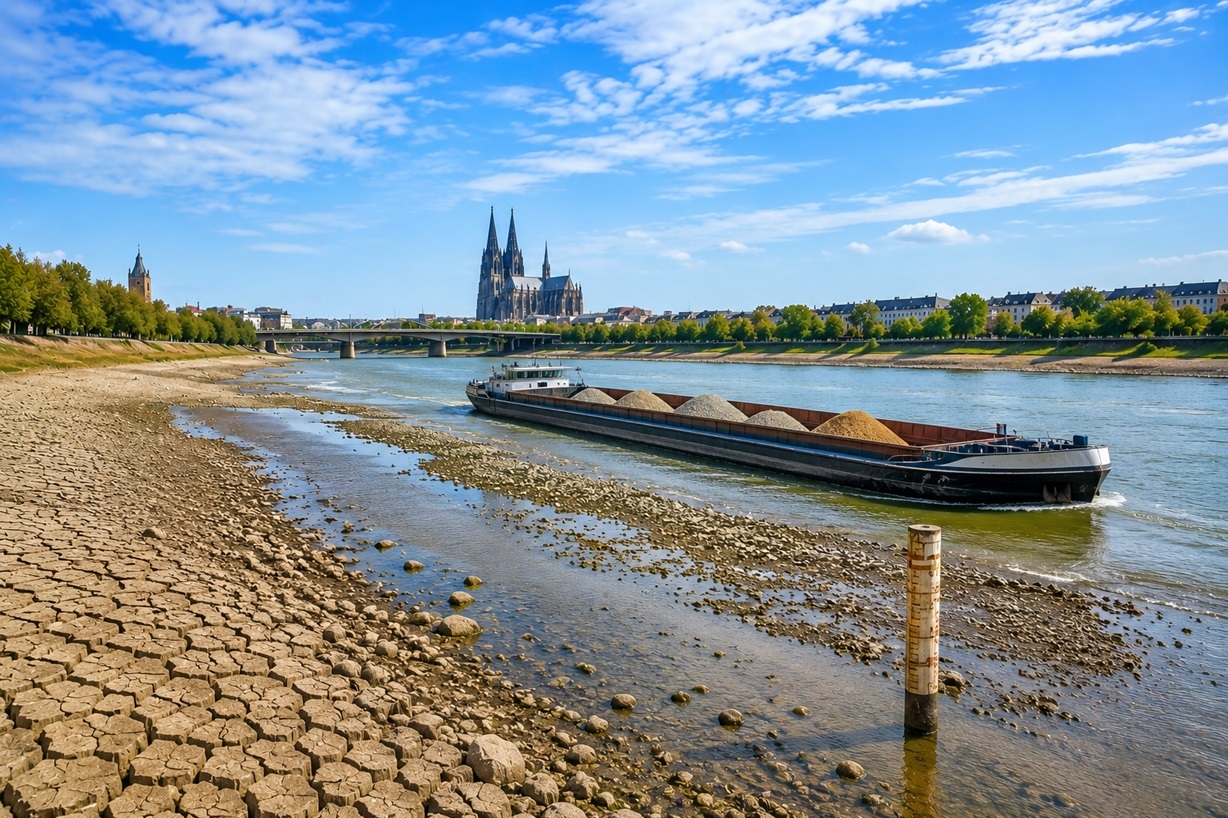
Yesterday, Germany's Federal Inland Navigation Agency reported that the water level in the Rhine has dropped to a record low due to prolonged heat, forcing shipowners to suspend navigation on the southern sections of the river.
According to the WSV water transport agency, on Tuesday the navigable depth in the narrow section of the Kaub (near Koblenz) reached only 15 cm, while the previous record minimum, recorded in 2018, was 25 cm. At the same time, the actual depth of the river is 1 m greater than the navigable depth.
The Kaub is effectively closed to shipping, with no cargo being carried on this stretch of the river, and some vessels south of Kaub may be trapped. However, there are no regulations on the water level at which navigation should be stopped, so some empty vessels still risk passing through the stretch.
The drop in water levels caused by heat and lack of rainfall means that ships can only be loaded to 20% of their capacity, so cargo has to be distributed among several ships, which increases transportation costs. However, navigation continues on the southern sections of the Rhine.
River operators warned on Monday that commercial shipping could come to a complete halt this week due to low water levels, prompting a significant shift in cargo to trucks, and some regions have eased weekend truck restrictions.
Experts note that restricting navigation on the Rhine could hamper the development of the country's economy, which has begun to show the first signs of recovery.
Like most of Europe, Germany has suffered from several heat waves and a lack of rainfall this year, which has led to the shallowing of rivers, including the Rhine, which is a major artery for transporting grain, petroleum products, minerals and coal.
