

The coldest wave of winter: how frosts down to -25 °C affected winter crops in Ukraine
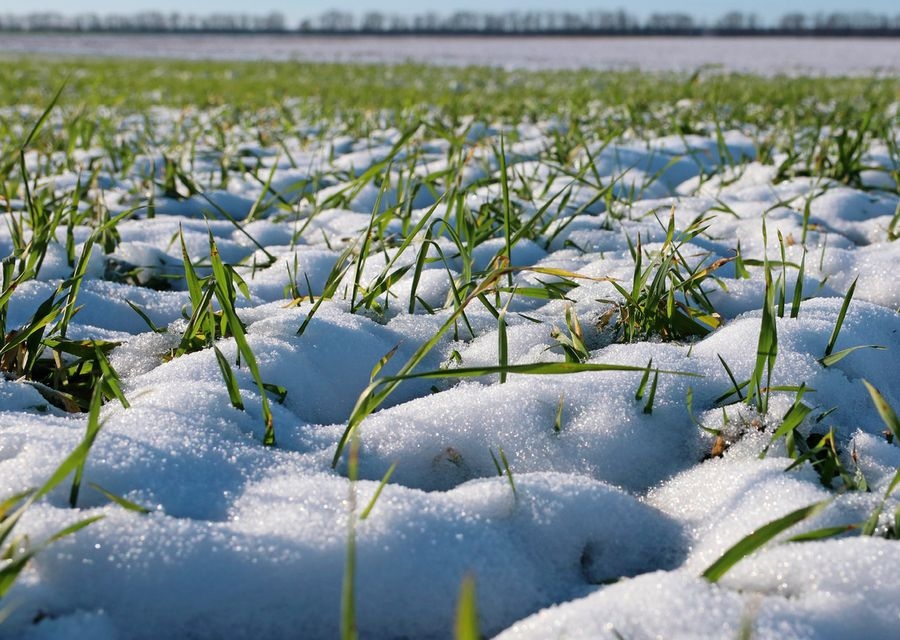
In early February, winter crops in Ukraine were hit by the lowest temperatures of this winter — minus 18–25 °C, which was accompanied by significant contrasts in snow cover between regions. Under normal plant development, critical frost-resistant thresholds are around –16…–17 °C for winter wheat at the tillering node level, –14…–15 °C for winter barley, and –12…–15 °C for winter rapeseed in the root collar zone.
The key factor is the thickness of the snow cover. A layer of 10–15 cm can raise the soil temperature by 10–15 °C compared to the air temperature. This means that crops under a sufficient layer of snow, even in frosts of -22…–25 °C, remain within the permissible limits and have a high chance of successful wintering.
The most favorable conditions were in the northern, western and part of the central regions, where minimum temperatures of -22…-25 °C were combined with snow cover of more than 15–20 cm. The risks for wheat, barley and rapeseed are minimal here. The situation was more difficult in the southern and part of the central regions - Mykolaiv, Odessa, Kherson, Zaporizhia, and in places Dnipropetrovsk and Kirovohrad regions, where temperatures of -14…-16 °C were combined with thin or absent snow (0–5 cm). This created a potentially critical load for winter barley and rapeseed, especially in fields with overgrown rapeseed or late crops with incomplete hardening.
This week, frosty weather with precipitation continues, but the risks for winter crops are decreasing. The accumulated moisture creates favorable conditions for the upcoming sowing campaign of spring crops.
