

The closure of Black Sea ports has changed the export logistics of oil and meal not only for Ukraine, but also for Kazakhstan
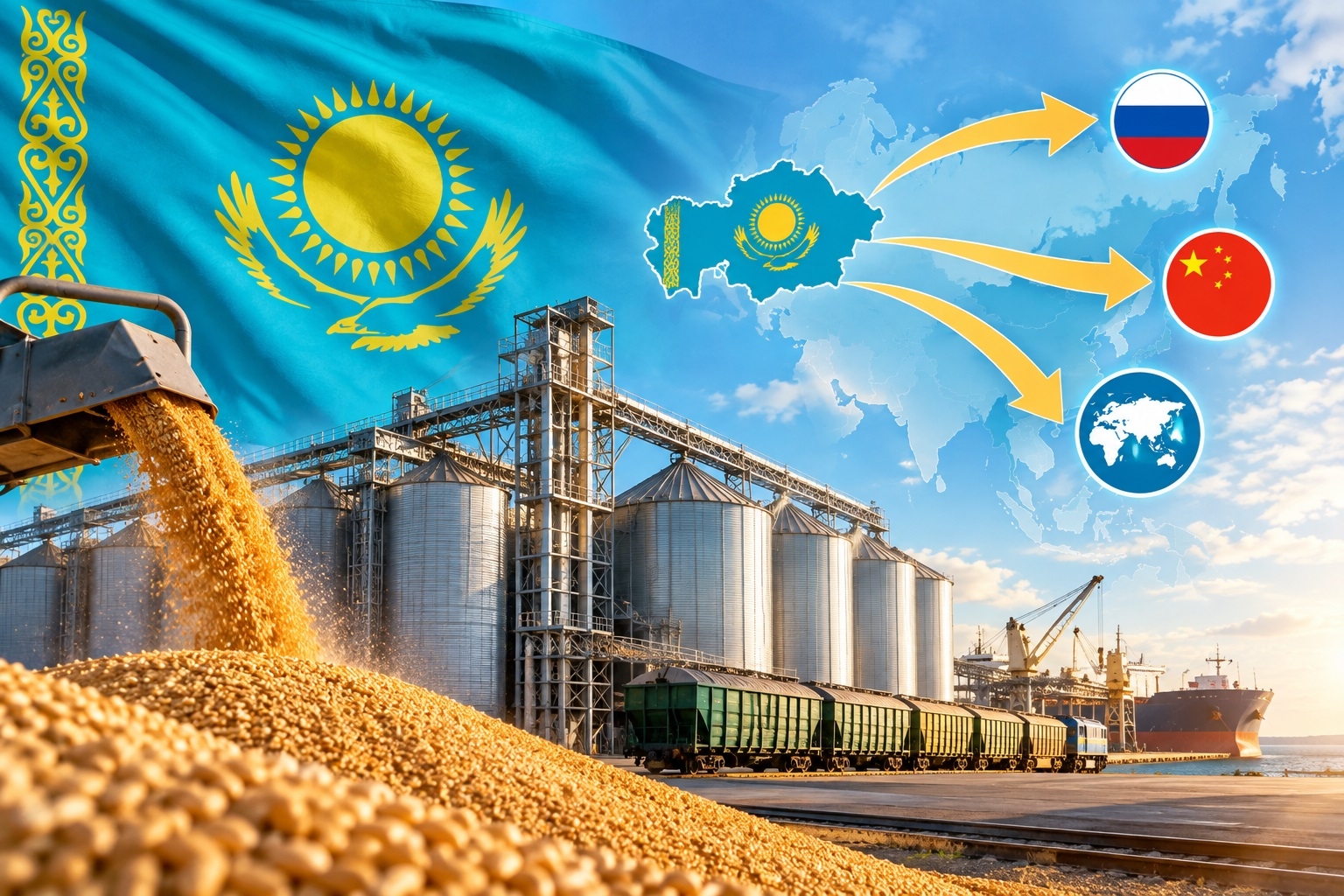
The blockade of the ports of Greater Odessa since July 2026, damage to Ukraine's port and transport infrastructure, and constant Russian attacks on ships in the Black Sea (even near the coast of Romania and Bulgaria) have led to an increase in freight costs and tightening of insurance conditions, which is forcing exporters of oilseeds and their processed products to look for alternative supply routes.
Domestic exporters have established operations through dry ports and border terminals. Cargo is delivered to the border for reloading into containers, which are then sent by rail to EU ports - Gdansk, Gdynia, Konstanz, Hamburg, and others.
The main supplies from Kazakhstan are sent in 20-foot containers via the port of Poti (Georgia) to the EU, the Mediterranean, Africa and the Middle East. However, they are limited by the lack of regular trains connecting Astana/Almaty - Poti, the need for MTU approval and a shortage of containers. The total transit time to Poti (taking into account the accumulation of cargo in Aktau) exceeds 30 days.
An effective alternative was a container train to Istanbul, which allowed goods to be delivered to Turkey in 18-20 days, after which they were shipped by sea to buyers. But such a route requires cargo consolidation and approval by the MTU.
There is also a corridor through the Polish crossing of Malaszewicz, through which cargo in big bags in bulk or in containers after transshipment into Eurowagons is sent throughout the EU. But its throughput is limited by the need to coordinate plans and deliver cargo by road (since most European plants accept cargo "from the water"), a shortage of Eurowagons. In addition, the cost of disposing of used flexitanks in the EU is 200-250 euros.
In the eastern direction, exporters from Kazakhstan send direct container trains to the central or coastal regions of China, with Chinese railways accepting meal for transportation only in big bags, while oil can be loaded in flexes of 27-28 cubic meters.
Against the backdrop of a reduction in supplies from Ukraine, Kazakhstan increased its agricultural exports in the first 9 months of 2026 compared to the same period last year by 34.7% from $4.8 to $6.4 billion, in particular by commodity:
- sunflower oil exports by 40.5% from 470.9 to 661.5 thousand tons, and in monetary terms - by 54.1% from $474.6 to $731.4 million,
- wheat and meslin – from 5.5 to 6.2 million tons, and in monetary terms – from $1.12 to $1.42 billion,
- wheat and wheat-rye flour – from 1.3 to 1.59 million tons, and in monetary terms – from $343 to $462.2 million,
- feed products – from 2.02 to 2.85 million tons, and in monetary terms – from $425.7 to $662.3 million,
- flax seeds – up to 881.7 thousand tons worth $429.3 million.
The expansion of Kazakhstan's processing capacity contributes to an increase in exports of processed grain and oilseed products.
