

According to MARS estimates, winter crop crops in Europe are in mostly good condition
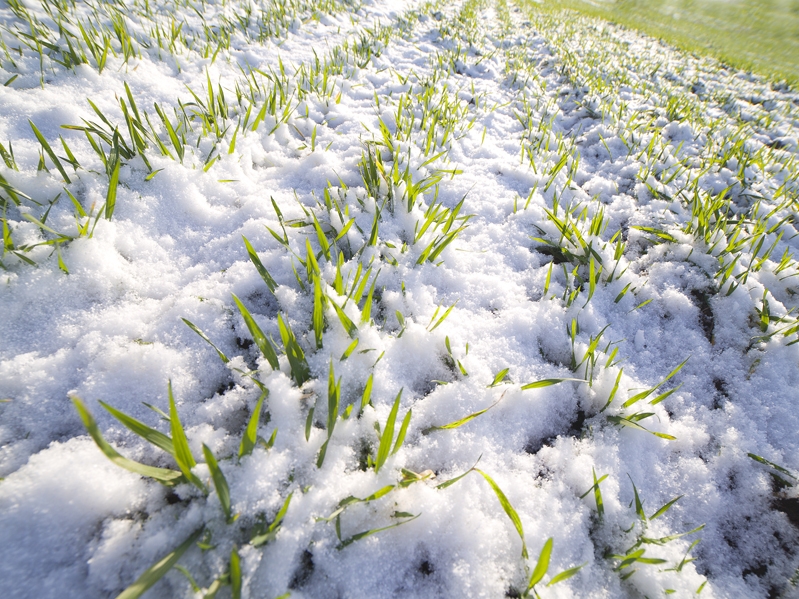
The European Crop Monitoring Centre MARS reported on Monday that conditions for winter crops in Europe remained generally satisfactory, although severe and prolonged frosts in some areas in the north and east could locally damage crops covered with a small layer of snow. Winter wheat has hardened quite well, but rapeseed and barley could be affected.
Heavy rains in western France, southern Europe and the western Mediterranean are replenishing soil moisture reserves but leading to flooding. In the Maghreb, rains are improving harvest prospects but there too, the amount is excessive.
MARS has not yet published yield forecasts for Europe, but has only given estimates for the three North African Maghreb countries (Morocco, Algeria, Tunisia). In these countries, the sown areas have hardly changed compared to last year, although they have decreased significantly in recent years (with the exception of Algeria). Thus, in Morocco, the sown areas of wheat decreased by 22%, durum wheat by 24%, barley by 34%, and in Tunisia, the areas under common wheat decreased by 56%.
Yields are forecast to be above average in some areas, but below average in others. However, increased winter rainfall has not been able to offset the decline in crop areas in these countries in recent years.
In Tunisia, wheat yields will increase by 7%, and production will exceed the 5-year average by 10%. In Morocco, wheat yields will increase by 8%, but the yield will be 20% lower than the 5-year average. In Algeria, wheat yields will increase by 10%, wheat production by 10% (durum by 11%, soft by 7%), and barley by 16%.
Barley production in these countries will exceed the 5-year average, but in Algeria it will increase by 16% compared to last year, while in Tunisia and Morocco it will decrease by 13% and 34%, respectively.
Experts are concerned about the condition of winter crops in eastern Poland, the Baltic countries and western Ukraine, where frosts in places reached -30 ° C, and the snow layer was not always sufficient to protect plants. In other European countries, winter crops tolerated frosts well. The risk of frost damage was lower in northeastern Germany, Denmark, Sweden, western Poland and central Ukraine.
In December, many regions of Europe, including the Center, the western Balkans, Romania and central Ukraine, experienced a deficit in precipitation. In January and February, northeastern Europe suffered from a deficit in moisture and low temperatures. Prolonged and severe frosts against a background of a light layer of snow locally damaged crops in Finland, the Baltic countries, Poland and Ukraine.
