

Russian shelling in the Kherson region has burned more than 5,000 hectares of grain, which already exceeds the losses of last season.
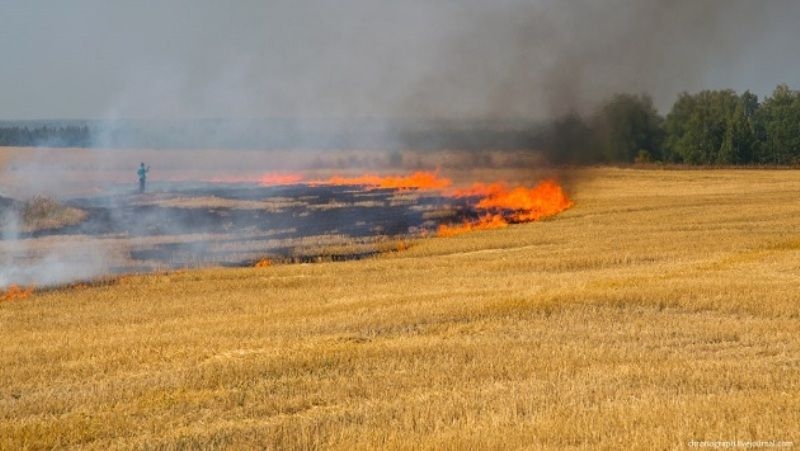
As of July 6, fires caused by Russian shelling destroyed more than 5,000 hectares of grain crops in the right-bank part of the Kherson region, which has already exceeded the losses of the previous season. Farmers are trying to extinguish the fires on their own and continue to harvest under constant attacks.
The head of the Kherson Region Farmers Association, V. Gordienko, emphasizes that "Russians are deliberately setting fire to fields with grain. In 99% of cases, the farmers themselves fight the fire, using fire extinguishers and tractors, cutting off the fields from the village so that they do not catch fire. But every day new Russian drones set fire to houses so that the fire comes from different sides. While the field or village is being extinguished, the fire starts from the other side, so it is simply not possible to put everything out completely."
According to the Department of Agricultural Development and Irrigation of the Kherson Autonomous Okrug, farmers in the Beryslav, Myliv, Novooleksandriv, and Tyahyn communities suffered the greatest losses. Farmers are not sure whether they will be able to sow winter crops in the fall, as about 5,000 hectares of land are in a high-risk zone.
In addition to the fields, Russian military forces are constantly attacking agricultural machinery and workers. Over the past 2-3 weeks, 7 tractors and 2 JCB combines have been destroyed, and workers have been seriously injured.
The Kherson Oblast Farmers' Association has appealed to the Ministry of Economy to compensate farmers for losses caused by the Russian attacks. However, the state compensation program applies only to legal entities and individual entrepreneurs, so it is planned to involve international organizations to support households.
For the 2026 harvest, Kherson farmers have sown 232 thousand hectares of area, but in the fall, the area sown with winter crops may decrease due to the difficult security situation.
