

Urea prices in Egypt rose to $535/t, which may affect prices in Ukraine
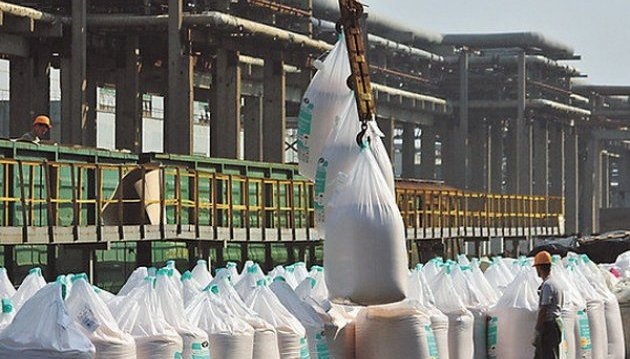
In November, export prices for granular urea in Egypt increased by 17.1% compared to September from $457/t to $535/t FOB due to restrictions on natural gas supplies to chemical enterprises and an increase in its cost.
Currently, Egyptian urea prices are $102/t higher than Chinese urea and $85/t higher than Middle Eastern urea. This difference is due to reduced production and demand for Egyptian products from European and other buyers.
The Egyptian authorities have reduced gas supplies to some industrial enterprises due to the high cost of imported liquefied natural gas. In particular, gas supply restrictions for fertilizer producers were increased from 20% to 33%, as a result of which the plants were forced to limit production, as gas is used not only as an energy carrier, but also as a raw material for the production of ammonia, a main component in the production of urea.
Analysts believe that this will negatively affect the work of export-oriented chemical enterprises in Egypt in the 4th quarter of 2026, and in the event of a prolonged deficit, throughout 2027.
Egypt is one of the world's largest producers and exporters of nitrogen fertilizers. Urea production is 6.5 million tons per year, and domestic consumption is 2.9 million tons, so the export potential is estimated at 3.6 million tons per year. However, actual supplies depend on plant utilization, domestic demand and production constraints.
In the first 9 months of 2026, Egypt increased its exports of chemical products by 34% to $9.54 billion, including fertilizers to $2.53 billion. Therefore, a reduction in fertilizer production could sharply reduce foreign exchange earnings for the country.
India remains one of the world's largest importers of urea. In the last tender, it planned to purchase 1.7 million tons of urea, but contracted only 410 thousand tons. Bid prices in the tender started at $352/ton CFR (including delivery to the port of destination).
Even despite the decline in demand from India, prices for Egyptian urea remain high, as they are supported by demand from buyers from the EU and other countries.
In Ukraine, urea prices do not fully reflect the dynamics of the Egyptian market, although they also depend on the global situation, exchange rates and domestic supply. As of November 1, they were 29,350-31,800 UAH/t, depending on the region and delivery conditions.
Further price dynamics will primarily depend on the stability of fertilizer production in Egypt, gas prices, and fertilizer supply from China, Nigeria, Algeria, and Middle Eastern countries.
