

Favorable precipitation in major grain exporting countries and a heat wave in Western Europe remain key weather factors for markets
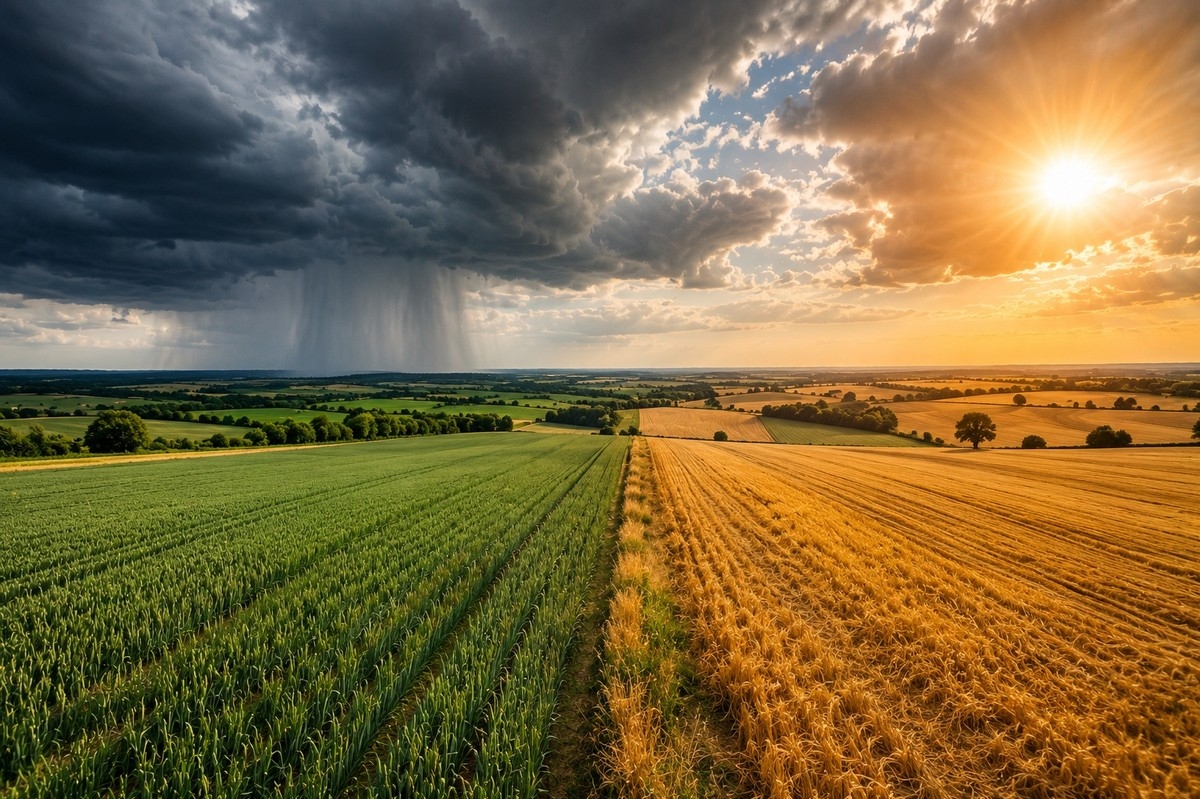
Weather conditions in the main grain and oilseed producing countries remain mostly favorable for the formation of the new crop. Despite scientists' warnings about the beginning of the El Niño phenomenon, which is traditionally associated with a decrease in precipitation in the Southern Hemisphere, in June most agricultural regions of the world continue to receive sufficient moisture and moderate temperatures.
Several fronts moved through the Midwest and Great Plains last week, bringing heavy rain and thunderstorms, along with cooler temperatures. The precipitation significantly improved soil moisture and helped corn, soybeans, and spring wheat crops grow. However, excessive rainfall slowed the winter wheat harvest in some areas.
Forecasters predict similar weather patterns will continue this week, continuing to improve crop conditions and increasing the potential for spring crops in the United States.
Canada is also in a favorable position. The Canadian prairies have received significant rainfall over the past ten days, with new rain fronts expected this week. High soil moisture and moderate temperatures may slow crop development somewhat, but overall conditions for grain and canola remain very good.
In Brazil, fronts with widespread rains passed through the central and southern regions last week. Another wave of precipitation is expected this week, which will help the second crop of safrinha corn. Against the background of favorable weather, corn production forecasts in the country have already increased to 140 million tons, and active arrival of Brazilian corn on the world market is expected from August.
In Argentina, excessive rainfall in recent weeks has somewhat slowed the pace of soybean harvest and winter wheat planting. However, according to the Buenos Aires Grain Exchange, soybeans have been harvested on 97.2% of the area and winter wheat planting has been completed on 57.6%, 16.6% ahead of the historical average, according to data from the Buenos Aires Grain Exchange.
The exchange also reports that corn harvesting in Argentina has been completed on 48.2% of the area, and the corn harvest in the 2025/26 season is forecast at a record level of 64 million tons.
Favorable weather conditions with regular rains and moderate temperatures persist in Ukraine and the southwestern regions of the Russian Federation. This has a positive effect on both winter and spring crops, creating a high harvest potential.
Local precipitation and a gradual increase in air temperature are expected in Ukraine next week, which will contribute to the ripening of winter grains and the acceleration of corn development.
Unlike most agricultural regions of the world, a heat wave is forming in Western Europe. After a period of sufficient moisture, temperatures are forecast to rise sharply in France, Germany and Poland.
Of particular concern is the situation in France, which is experiencing one of the longest heat waves with temperatures of 40–44°C. Such conditions can negatively affect spring crops, which are in important phases of crop formation.
In the eastern part of Europe, weather conditions will remain milder due to the passage of atmospheric fronts with rain and lower temperatures towards Ukraine.
In Australia, rain fronts moved through eastern regions last week, with additional rainfall forecast for this week. Soil moisture levels have improved significantly in many areas over the past month.
At the same time, meteorologists note that such a rainfall amount is atypical against the backdrop of a strengthening El Niño. Therefore, closer to the beginning of the Australian spring, which falls on our autumn, a transition to drier conditions is possible, which could create risks for winter wheat and rapeseed crops.
In China, weather conditions also remain mostly favorable. In the northeast of the country, periodic rains will continue to support the development of corn and soybeans. Meanwhile, in the North China Plain, drier weather is conducive to active harvesting of wheat and rapeseed.
Overall, weather conditions in most major agricultural regions of the world remain favorable for the formation of high yields of grain and oilseed crops, which continues to put pressure on world prices and improves the prospects for the global grain balance in the new season.
