

Panic in the oil market caused by fears of a possible expansion of the conflict to the entire Middle East
On the 9th day of the war with Iran, it became clear that the US and Israel were not ready for the response – the Iranian plan Madmen “crazy”, which envisaged strikes not only on Israel and US bases in the region, but also on the civilian and oil infrastructure of neighboring and friendly countries to Iran. Iran decided to make the war extremely expensive not only for Israel and the US, but also for the Arab countries, their economies, tourism, energy, transport and shipping.
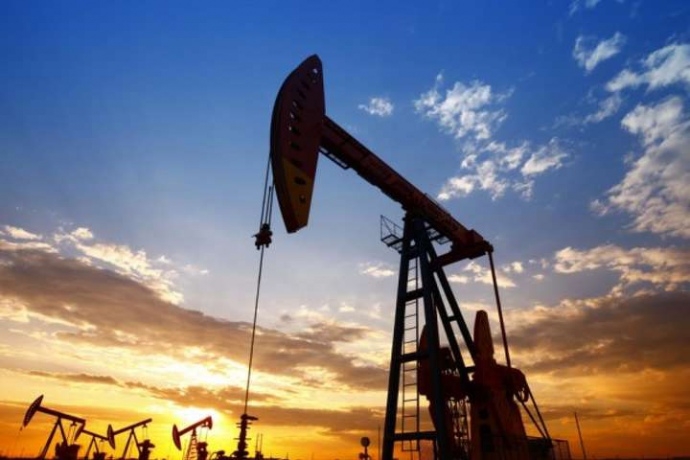
Strikes on oil terminals and threats to attack all ships moving through the Strait of Hormuz were the main reason for the increase in oil prices, which rose by 27% on Monday at the opening of Asian markets.
May Brent crude futures rose another 9.4% to $93/barrel on Friday (+25.6% for the week), but on Monday morning at the opening of trading on Asian exchanges, prices jumped 27% to $119/barrel within an hour , although they later fell to $107/barrel.
Recall that the historical record of $147/barrel for oil prices was set in 2008 on the eve of the global financial crisis and the Russian attack on Georgia, and in 2022, after the start of the Russian full-scale invasion of Ukraine, prices temporarily rose to $120-130/barrel.
Since the beginning of the war, the US military has already sunk more than 42 Iranian vessels and declared the Strait of Hormuz safe for navigation, but ships are not taking the risk of passing through the strait because Iran damaged two tankers in the first days of the war.
If previously about 1,000 ships passed through the Persian Gulf per day, then on March 6 only 6 vessels passed through, including 3 tankers, and almost 3,000 ships have already accumulated in the queue on both sides.
US Energy Secretary Wright said that stable energy supplies, including liquefied natural gas (LNG) and oil, will be restored after the US neutralizes the Iranian threat to the Strait of Hormuz. “We are significantly reducing their ability to strike with missiles and drones, and the rate of this reduction will increase in the coming days. So we will be careful, but energy supplies will soon be restored.” He added that one should not be too concerned about short-term increases in prices for petroleum products, gas and fertilizers, as supplies from the Persian Gulf will soon resume. President Trump also warned that oil prices will fall sharply after the restoration of free passage of ships.
Vegetable oil quotes are rising following oil quotes, but at a slightly lower pace, as refiners are reluctant to buy expensive oil for biofuels, hoping for a drop in oil prices soon.
The oil crisis caused by the war in Iran will accelerate the global transition to electric vehicles. In 2025, about 21 million electric vehicles were sold worldwide (about one in four cars sold). The average electric vehicle (a golf hatchback or compact crossover) reduces oil demand by 2 tons per year, so 21 million electric vehicles would reduce global oil demand by 42 million tons per year. To put that into perspective, Iran’s entire oil exports amount to about 65 million tons of oil per year.
