

On the 9th day of the war in Iran, the escalation intensifies
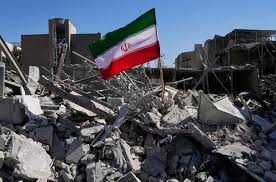
After 9 days of the US-Israeli war against Iran, it became clear that Iran was ready to attack and had created a plan to draw the entire Middle East region into the war, hitting the global economy with rising oil prices and increasing tensions on the stock markets.
According to the New York Times, the Iranian government began preparing for a new war with Israel and the United States after the 12-day conflict in 2025 and developed Operation Madman. Ayatollah Khamenei has appointed four levels of succession to ensure there is no power vacuum in the event of his death.
Iran's plan was to make a war with Iran extremely costly not only for Israel and the US, but also for Arab countries, their economies, tourism, energy, transportation, and shipping.
In the first stage, Iran was to attack Israel, in the second — American military bases in Arab countries, and in the third — civilian targets in Arab countries, including airports, hotels, and embassies where Americans could be located.
Within a few days of the war, Iran had implemented all three stages of the plan, attacking 14 neighboring states, including friendly Azerbaijan and Turkey.
Over the weekend, a desalination plant in Bahrain was attacked, which brought the conflict to a new stage, as the Persian Gulf countries obtain most of their water through desalination: Qatar – 100%, Kuwait and Bahrain – almost 90%, Oman – 86%, Saudi Arabia – 70%.
UAE President Sheikh Mohammed bin Zayed al-Nahyan said after the Iranian attacks that the country was now at war, but it would not become "easy prey." Since the start of the war, 40% of Iran's strikes have been directed at the UAE and 20% at Israel.
Yesterday, 30 oil tanks were hit in Tehran, and a large fire was seen over the city at night. This was the first Israeli strike on Iran's oil reserves after it attacked the oil and gas infrastructure of neighboring countries (Qatar, Saudi Arabia and Bahrain).
On Saturday morning, Iranian President Pazeshkian announced that Iran would not attack neighboring countries unless they attacked Iran, but then Dubai Airport and the 23 Marina skyscraper were attacked.
This indicates a certain split in the Iranian government, but the real power in the country remains the regime of the ayatollahs and the IRGC (a separate military structure that reports not to the president, but to the supreme leader of Iran). On Sunday, the council of the ayatollahs elected Mojtaba Khamenei, the son of the deceased Ayatollah Ali Khamenei, as the supreme leader of Iran. This may increase the differences in power, since Shiites do not support the hereditary transfer of power.
US and Israeli aviation continues to destroy Iran's military potential, as confirmed by the dynamics of Iran's ballistic missile launches:
- day 1 - 350
- day 2 - 175
- day 3 - 120
- day 4 - 110
- day 5 - 50
- day 6 - 35
- day 7 - 35
- day 8 - 30
While Iran's missile attacks are decreasing due to the destruction of launch sites by the US military, drone strikes (which in the early days reached 200-350 units/day, but then decreased) have increased again to 150-200 units/day. Experts believe that Iran's stockpile of Shahed-136 drones may amount to tens of thousands, so the threat of strikes will remain. Ukraine has already promised the US and its allies to share its experience in combating drones.
However, hostilities will continue at least until the end of March, until the meeting of the presidents of the US and China takes place, as the rise in oil prices threatens a crisis for the entire global economy, which no one is interested in.
