

China increases imports of rapeseed oil from Russia amid reduced purchases of Canadian canola
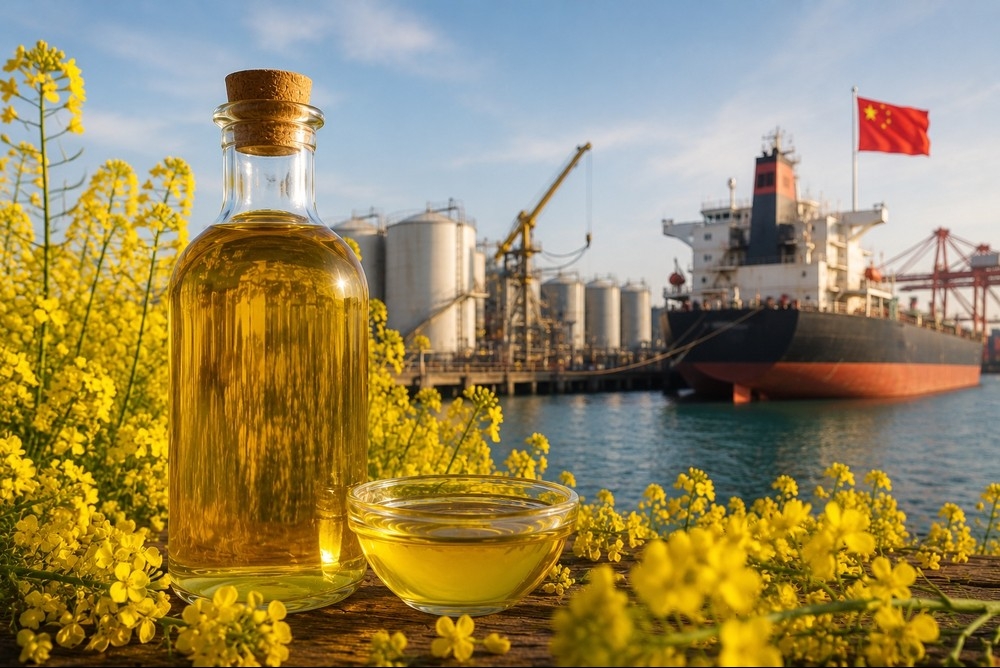
According to Agroexport's calculations, by the end of the 2025/26 marketing year (July 2025 – June 2026), China will import more than 1.4 million tons of rapeseed oil from the Russian Federation, which will be a record figure and exceed the result of the previous season.
Currently, China's share in the structure of Russian rapeseed oil exports exceeds 90%, which indicates the strengthening of the Russian Federation's role as a key supplier of this product to the Chinese market. In fact, China is largely compensating for the reduction in Canadian canola supplies after the introduction of tariffs and trade restrictions.
However, the potential for further supply growth remains significant. According to the USDA, China's rapeseed oil imports in the 2026/27 season could increase to 2.25 million tons, which would be 5% higher than in the 2025/26 MY. Domestic rapeseed oil consumption in the country will also continue to grow and could reach 10 million tons (+1%).
Additional opportunities for increasing exports are associated with the expected increase in rapeseed production in the Russian Federation. According to preliminary estimates, the rapeseed harvest in the 2026/27 season may increase to 6 million tons compared to 5.6 million tons in 2025. In addition, new rapeseed processing facilities are planned to be launched in the eastern regions of the country, primarily aimed at exports to Asian markets.
At the same time, Russian rapeseed meal shipments to China could also reach record levels. According to analysts, exports of this product will exceed 0.8 million tons in the 2025/26 MY, compared to 0.35 million tons in the 2024/25 MY. Thus, China will remain the main sales destination for Russian rapeseed meal for the second season in a row.
The reorientation of Russian exports to the Chinese market occurred after the loss of access to the EU market, which, before the introduction of restrictions, was the main buyer of Russian rapeseed oil and meal.
For Ukraine, this situation creates additional opportunities on the European market. Ukrainian processors are actively increasing supplies of rapeseed oil to EU countries, gradually replacing Russian products. At the same time, in the future, the Ukrainian sector needs to expand the geography of exports and look for opportunities to increase supplies of rapeseed oil to the Chinese market.
Significant changes have also occurred in the canola market. In the first half of the 2025/26 season, China sharply reduced canola imports from Canada to 0.3 million tons, compared to 3 million tons in the same period in the 2024/25 marketing year. After a partial reduction in tariffs in March, imports began to gradually recover, but at the end of the season, analysts expect deliveries to be only 3–3.5 million tons, compared to 6 million tons in the previous marketing year.
Thus, the Chinese rapeseed market continues to actively restructure, and the main beneficiaries of the reduction in Canadian canola imports currently remain Russian rapeseed oil and meal producers.
