

After 25 years of negotiations, the European Union has finally signed a trade agreement with Mercosur, which will make it more difficult for Ukrainian products to compete on the EU market.
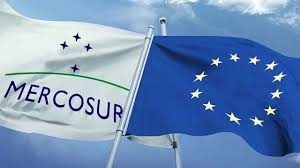
The European Union and the South American economic bloc Mercosur (Argentina, Brazil, Paraguay, Uruguay, Bolivia and associate members Chile, Peru, Colombia, Ecuador, Suriname, Guyana) have finally signed a Partnership Agreement, as well as an Interim Trade Agreement, after more than 25 years of negotiations, the European Commission announced.
"Today, two like-minded regions are opening a new page of opportunities for over 700 million citizens. With this mutually beneficial partnership, we both win – economically, diplomatically and geopolitically. Our companies will create exports, growth and jobs. And our signal to the rest of the world is clear: the EU and Mercosur choose cooperation over competition and partnership over polarization," said European Commission President Ursula von der Leyen in the Paraguayan capital Asuncion on Saturday, January 17.
The agreement will create a wide range of economic opportunities in the EU by:
- Eliminating tariffs on EU exports, including agri-food and key industrial goods such as cars, machinery and pharmaceuticals, which will save EU businesses €4 billion in tariffs per year;
- Simplifying, accelerating and securing investments in key supply chains, including critical raw materials and related goods;
- Strengthening economic security and supporting digital and green transitions on both sides;
- Assisting the EU and Mercosur in shaping global trade rules in accordance with the highest EU standards.
The Agreement will also open unprecedented access to the Mercosur region for European farmers and food producers.
The Agreement is expected to increase EU agri-food exports to Mercosur by up to 50%. Following its signature, the EU and Mercosur will now follow their respective procedures to work on the ratification of the Agreement.
It should be noted that the abolition of tariffs on products from Mercosur countries will increase supplies of cheap agricultural products to the EU and continue to put pressure on Ukrainian farmers, who have already lost a large part of the EU market, especially after the abolition of duty-free imports introduced after the start of the war.
Since the beginning of the 2025/26MY (01.07.25–11.01.26), grain imports into the EU have decreased by 26% to 12.75 million tons, in particular corn – by 19% to 8.87 million tons, of which Brazil supplied 33.2%, the USA – 32.8%, Ukraine – 27.1%. Ukraine’s share in imports is gradually decreasing, as the EU diversifies supplies and focuses on cheaper products from South America. Wheat imports into the EU have decreased by 52% to 2.2 million tons, which means Ukraine’s loss of positions in the amount of about 2.5 million tons. The leaders in EU imports are Canada (40%), Ukraine (22%) and Moldova (18%). Rapeseed imports decreased by 42% to 1.94 million tons, soybeans by 14% to 6.61 million tons. Ukraine maintains its leadership in imports of rapeseed (58.8%) and sunflower oil (92.5%), but is losing share in the soybean and meal segment.
