

EU sharply increases oilseed exports despite reduced sunflower production and reduced processing
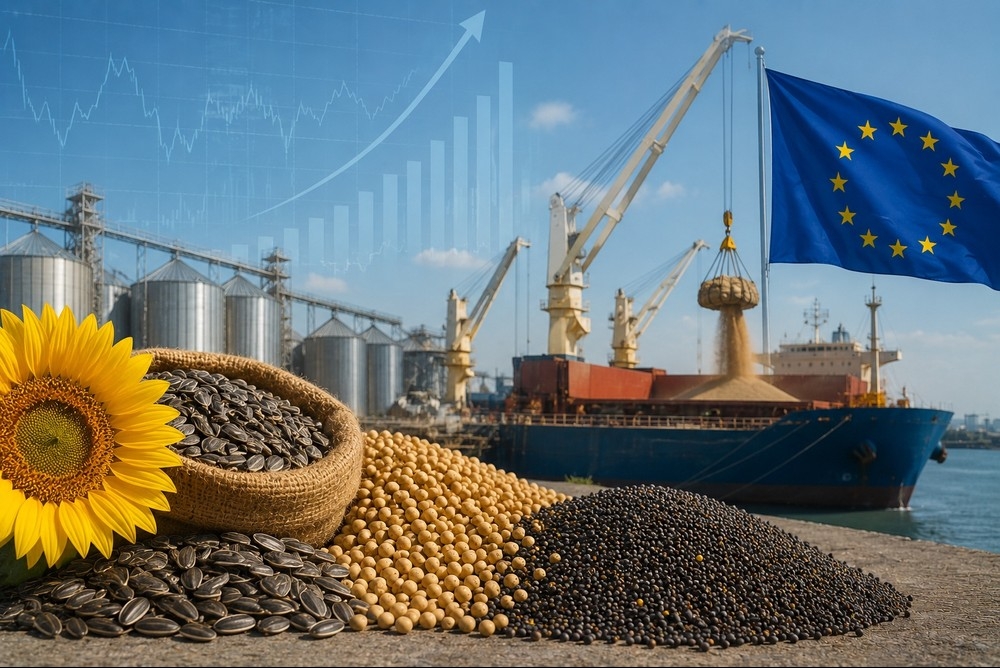
In the first 50 weeks of the 2025/26 season, European Union countries significantly increased their oilseed exports.
The total volume of deliveries reached 1.833 million tonnes, which is 41% higher than the same period last marketing year, according to data from the European Commission.
The highest export growth rates were recorded for rapeseed and sunflower, while most processed products — meals and vegetable oils — show a decrease in supplies.
By individual crops, exports amounted to:
- soybeans — 281 thousand tons (-24% compared to the same period last year);
- rapeseed — 573 thousand tons (+57%);
- sunflower — 978 thousand tons (+74%).
Exports of processed products amounted to:
- soybean meal — 418 thousand tons (-13%);
- rapeseed meal — 677 thousand tons (-10%);
- sunflower meal — 304 thousand tons (-4%);
- soybean oil — 564 thousand tons (-24%);
- rapeseed oil — 586 thousand tons (+14%);
- sunflower oil — 410 thousand tons (-25%).
At first glance, the rapid increase in sunflower seed exports seems paradoxical, as EU production of this crop has declined this season. However, the main reason was the sharp deterioration in the economics of sunflower processing.
Due to low margins, European oil extraction companies have reduced sunflower processing to the lowest level in the last nine years - about 7.4 million tons compared to 9 million tons in 2024. At the same time, many plants have reoriented their capacities to processing rapeseed and imported canola, which provide higher profitability.
Under these conditions, traditional sunflower producers in the EU, primarily Romania and Bulgaria, have increasingly exported seeds instead of processing them domestically. The main destinations of supply have become Turkey, North African countries, the Middle East and the United Kingdom.
The continued low margins of sunflower processing in Europe may continue to support high seed export volumes, while demand for sunflower oil and meal will remain relatively weak.
